Married Filing Jointly: Both Spouses Must Agree (Even with No Income)
Key Takeaways
- Both spouses must agree to file jointly — it cannot be one-sided
- MFJ is available even if one spouse has zero income
- MFJ often provides the greatest benefit when incomes are unequal
- MFJ brackets are roughly double the width of Single brackets
- Both spouses are jointly and severally liable for the tax on the joint return
Both Spouses Must Agree to MFJ
To file Married Filing Jointly, both spouses must consent to the joint return. One spouse cannot unilaterally decide to file jointly — it requires agreement from both parties. This is a fundamental requirement that is sometimes overlooked.
MFJ with No-Income or Low-Income Spouse
A common question is whether MFJ is available when one spouse has no income. The answer is absolutely yes. MFJ does not require both spouses to earn income. A married couple where one spouse earns $100,000 and the other earns $0 can file jointly, combining the income and benefiting from the wider MFJ brackets and higher standard deduction.
In fact, this scenario is often where MFJ provides the most benefit — the higher-earning spouse gets access to MFJ brackets that are roughly double the width of Single brackets, resulting in lower tax on their income.
File Your LLC Taxes Now
Generate your IRS Form 5472 + pro forma Form 1120 in 15 minutes. Every field linked to official IRS instructions. $49, no CPA needed.
More on Filing Status Guide
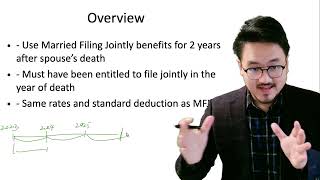 5:21
5:21Form 1040 Filing Status: Qualifying Surviving Spouse Explained
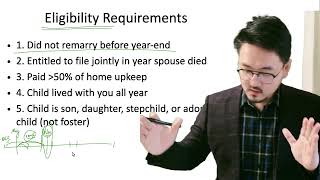 6:05
6:05Qualifying Surviving Spouse Eligibility: Did Not Remarry Requirement (Part 1)
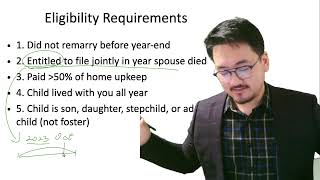 5:33
5:33Qualifying Surviving Spouse: Entitled to File Requirement (Part 2)
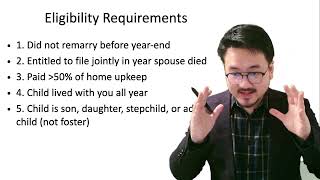 12:42
12:42Qualifying Surviving Spouse: Paid More Than 50% Cost of Home (Part 3)
 3:58
3:58Qualifying Surviving Spouse: Cost of Home Calculation Example (Part 4)
 6:13
6:13