Form 8857: IRC Section 6015(f) Equitable Relief Explained (Part 1)
Key Takeaways
- Equitable relief is the fallback when classic relief and separation of liability don't apply
- Can address both understatements (wrong return) AND underpayments (unpaid correct return)
- No fixed time deadline — but file promptly for best results
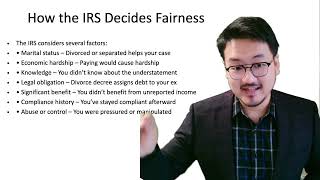
- The IRS evaluates the overall fairness of holding you liable
- Designed to handle real-world complexity that stricter rules don't cover
What Is Equitable Relief (IRC §6015(f))?
Equitable relief is the safety net of innocent spouse provisions. If you do not qualify for classic innocent spouse relief or separation of liability, equitable relief provides a third option when it would simply be unfair to hold you responsible for your spouse's tax errors.
The IRS designed this provision to address real-world complexity — life is not black and white, and the tax code should not force innocent people to pay for their spouse's mistakes just because they do not fit neatly into the stricter relief categories.
When Equitable Relief Applies
Equitable relief applies in two situations: when there is an understatement of tax (your spouse reported less tax than owed) or an underpayment of tax (the return was correct but the tax was not paid). Unlike classic innocent spouse relief, equitable relief can address underpayment situations — making it the only relief option when the return was accurate but your spouse failed to pay.
There is no fixed time limit for equitable relief requests, unlike the 2-year deadline for classic relief and separation of liability. However, filing promptly is always advisable.
IRS Form 8857 Instructions
Official IRS source on irs.gov
Listen on Spotify
Money & Tax Talk with Rippa — 5/5 rating
Watch on YouTube
ForeignLLCTax — 187 videos
File Your LLC Taxes Now
Generate your IRS Form 5472 + pro forma Form 1120 in 15 minutes. Every field linked to official IRS instructions. $49, no CPA needed.