Form 8857 Introduction: What Is Innocent Spouse Relief?
Key Takeaways
- Form 8857 allows innocent spouses to seek relief from joint return tax liabilities
- Three types: classic innocent spouse, separation of liability, and equitable relief
- Joint filing creates joint and several liability — either spouse can be held responsible for everything
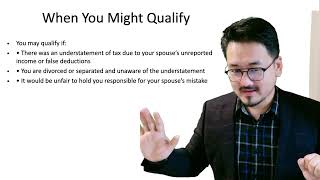
- Relief is available for understatements caused by the other spouse's errors or omissions
- Each case is evaluated based on specific facts and circumstances
What Is Innocent Spouse Relief?
Innocent spouse relief, claimed through Form 8857, provides relief from additional tax owed when your spouse or former spouse improperly reported items or omitted items on a joint tax return. When you file jointly, both spouses are jointly and severally liable for the entire tax due — innocent spouse relief is the IRS's mechanism for protecting the spouse who was genuinely unaware of the errors.
Three Types of Relief
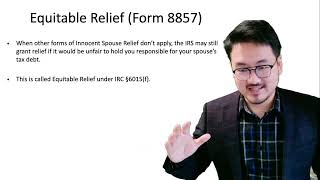
The IRS offers three types of innocent spouse relief. Classic Innocent Spouse Relief under IRC §6015(b) applies when your spouse understated tax due to erroneous items. Separation of Liability under IRC §6015(c) allocates the understatement between you and your spouse. Equitable Relief under IRC §6015(f) is a catch-all when you do not qualify for the first two types but it would be inequitable to hold you liable.
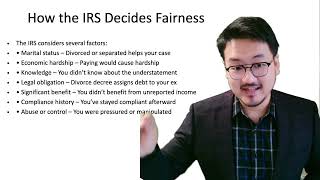
Each type has different qualification requirements, and the IRS evaluates requests based on the specific facts and circumstances of each case.
IRS Form 8857 Instructions
Official IRS source on irs.gov
Listen on Spotify
Money & Tax Talk with Rippa — 5/5 rating
Watch on YouTube
ForeignLLCTax — 187 videos
File Your LLC Taxes Now
Generate your IRS Form 5472 + pro forma Form 1120 in 15 minutes. Every field linked to official IRS instructions. $49, no CPA needed.