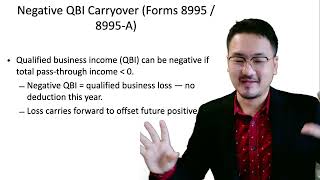
Negative QBI Carryover: What It Means for Your Tax Return
Key Takeaways
- Negative QBI means no 20% QBI deduction in the current year
- The negative amount carries forward to offset future positive QBI
- Future QBI deductions will be reduced by the carried-forward negative amount
- The carryforward is mandatory — cannot be waived or elected out of
- Having positive QBI in the future (even if reduced) means your business is profitable
Negative QBI Carryover Implications
When your qualified business income is negative (your pass-through businesses had net losses), you cannot claim the 20% QBI deduction that year. The negative amount carries forward and will offset positive QBI in future years before the 20% deduction is calculated.
Think of it this way: the loss does not disappear. In a future year when your businesses are profitable, the carried-forward negative QBI will reduce the positive QBI before the 20% deduction is computed, resulting in a smaller deduction than you would otherwise receive.
Silver Lining
While losing the QBI deduction is disappointing, the positive side is that in a future year when negative QBI offsets positive QBI, it means your business is profitable — you are earning money. The reduced QBI deduction is simply the cost of having had losses in prior years.
The negative QBI carryforward is required by law, so there is no way to avoid it. The best approach is to plan for it and understand its future impact on your tax returns.
File Your LLC Taxes Now
Generate your IRS Form 5472 + pro forma Form 1120 in 15 minutes. Every field linked to official IRS instructions. $49, no CPA needed.