Key Takeaways
- Installment sales spread tax over the period payments are received (Form 6252)
- Prevents paying tax on gains before the cash is actually received
- Gross profit percentage determines the taxable portion of each payment
- Interest received on installment payments is reported separately as ordinary income
- Critical for business owners selling assets, real estate, or business interests over time
What Are Installment Sales?
An installment sale occurs when you sell property and receive at least one payment after the tax year of the sale. Form 6252 allows you to spread your tax liability over the period you actually receive payments, rather than paying all the tax in the year of sale. This can be a significant cash flow advantage for business owners and entrepreneurs.
Why Installment Sales Matter for Cash Flow
One of the most important lessons in running a business is maintaining healthy cash flow. You do not want to owe tax on income you have not yet received. Without the installment method, if you sell an asset for $1 million with payments spread over 5 years, you might owe tax on the entire $1 million gain in year one — even though you only received $200,000.
With Form 6252, you report gain proportionally as payments are received. Your gain is spread over the payment period, matching your tax liability with your actual cash inflow.
How the Calculation Works
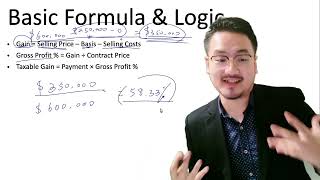
Form 6252 calculates three key numbers: the gross profit percentage (the ratio of your total gain to the total contract price), the payment received in each year, and the taxable portion of each payment (payment multiplied by the gross profit percentage). Interest received is reported separately as ordinary income.
For example, if your gross profit percentage is 40% and you receive a $50,000 payment, you would report $20,000 as gain from the installment sale (50,000 × 40%). The remaining $30,000 represents return of your cost basis and is not taxed.
File Your LLC Taxes Now
Generate your IRS Form 5472 + pro forma Form 1120 in 15 minutes. Every field linked to official IRS instructions. $49, no CPA needed.