Foreign Income Filing Obligations Reminder for U.S. Taxpayers
Key Takeaways
- The IRS checks gross income (before exclusions/deductions) to determine filing requirements
- Filing obligation depends on income, filing status, and age
- You must file first, then claim exclusions and deductions — these are separate steps
- No tax owed does NOT mean no filing required
- Income from any country worldwide counts toward the filing threshold
How the IRS Determines Filing Obligations
The IRS looks at your gross income — everything you earned before any exclusions or deductions — to determine whether you must file a return. Even if you qualify for the foreign earned income exclusion or other deductions that would reduce your tax to zero, the IRS still expects you to file first and then claim the exclusion or deduction. Filing and excluding are two separate steps.
Three Factors That Determine Your Obligation
Your filing obligation depends primarily on three factors: your income level, your filing status, and your age. If your total income crosses the IRS threshold for your filing status and age, you must file — regardless of where that income was earned. Income from Shenzhen, Switzerland, or Singapore all counts toward the threshold.
A common misconception is 'no tax means no filing.' Many taxpayers correctly determine they owe no U.S. tax (due to foreign tax credits or exclusions) and incorrectly conclude they do not need to file. The filing requirement is based on gross income, not tax owed.
File Your LLC Taxes Now
Generate your IRS Form 5472 + pro forma Form 1120 in 15 minutes. Every field linked to official IRS instructions. $49, no CPA needed.
More on Foreign Income Reporting
 4:15
4:15Foreign Income Overview: U.S. Tax Rules for International Taxpayers
 5:42
5:42FBAR Guide: FinCEN Report 114 for Foreign Bank Account Reporting
 4:55
4:55Form 8938 Introduction: FATCA Foreign Financial Assets Reporting
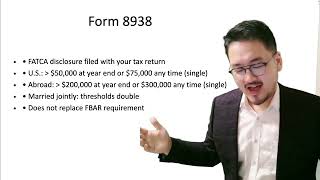 6:30
6:30Form 8938 Detailed Guide: Thresholds and Filing Requirements
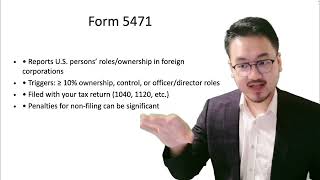 5:18
5:18Form 5471: Information Return for Foreign Corporation Ownership
 4:44
4:44